Our specialties · Diamond Bar, CA
Dynamic Movement Intervention (DMI)
Active movement. Meaningful milestones.
DMI is one of our main specialties at Sensory Bridge. It offers a structured way to work on movement and postural control, with goals connected to your child’s everyday life.
What is DMI?
Dynamic Movement Intervention is a hands-on approach used by physical and occupational therapists for children with motor delays. The therapist sets up specific movement challenges and supports the child while encouraging an active response.
DMI focuses on automatic postural responses: the adjustments the body makes to stay upright and balanced as it moves. Goals may include head and trunk control, transitions, sitting, standing and walking.
Read more: DMI: approach, goals and session overview
Who might explore DMI?
Families may ask about DMI when a child has delayed motor milestones or difficulty maintaining positions and moving between them. The official DMI organization describes its use for children with conditions such as cerebral palsy, hypotonia, Down syndrome and other neurological or genetic conditions.
An evaluation helps determine whether this approach fits your child’s current abilities, medical history and family goals. A diagnosis alone does not determine the treatment plan.
What can a session involve?
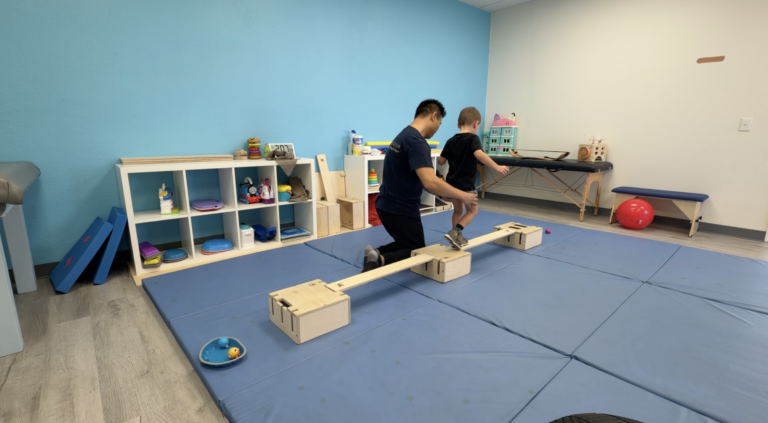
DMI uses repeated, purposeful movement challenges. Your therapist adjusts the task and the amount of support to encourage an active response. Sessions may use floor activities, a therapy table, or wooden DMI boxes and beams for carefully selected standing, stepping and balance tasks.
At Sensory Bridge, the starting point is your child’s evaluation and the goals you identify together. Bring questions about handling, comfort, activity choices and how the session connects with skills at home.
Read more: DMI: approach, goals and session overview
Looking ahead: DMI and developing research
We are excited about DMI’s focus on movement and developmental milestones. The official DMI organization reports encouraging practitioner observations and ongoing efforts to build research. Its Children’s Foundation supports research grants.
DMI-specific evidence is still developing. Clinical observations and research on motor learning provide reasons to investigate the approach, but they do not yet establish how effective DMI is or which treatment schedule works best. We connect treatment with your child’s goals and review their individual progress.
Read more: DMI: parent questions, suitability and research · DMI: approach, goals and session overview
Our DMI team
Our DMI team includes Dr. Bryan Kwon, PT, DPT (DMI Level C), and Richelle Mojica, BS, PTA (DMI Level B). Learn more about their backgrounds on our team page.
Contact us to discuss the appropriate clinician and appointment options for your child.
Meet our clinical teamCommon questions
Will DMI help my child walk?
Walking may be a goal, but progress is individual. Better head control, steadier sitting or easier transitions can also be meaningful changes. An evaluation helps establish realistic goals and ways to track them.
Is DMI the same as all pediatric physical therapy?
DMI is one approach within pediatric rehabilitation. The broader treatment plan can include other strategies selected for your child’s needs.
What does the research say?
DMI’s research is developing, and the organization describes encouraging practitioner observations and efforts to build the evidence. We are excited to follow this work. Research will help clarify who benefits, how much treatment is appropriate and how gains carry over into everyday life. Individual progress guides our ongoing treatment decisions.
Can we practice DMI exercises at home?
Ask your treating clinician which activities are appropriate and how to do them safely. Hands-on exercises should be taught for your child rather than copied from a video.
How often would my child attend?
At Sensory Bridge, we generally recommend DMI 2–3 times per week to support consistent practice and help your child get the most from therapy. Your therapist individualizes frequency based on your child’s goals, response, tolerance and family circumstances.
Can DMI be combined with other therapies?
Yes. DMI can be one part of an individualized pediatric therapy plan. Your therapist may combine movement practice with other approaches selected for your child’s needs, with progress measured through meaningful skills such as sitting, transitions, balance or mobility.
Explore pediatric physical therapy · Prepare for a first visit
Sources and resources for families
Explore practical information for families from these organizations. Explore the original organizations’ explanations below.
Start with your family’s questions.
Tell us what your child enjoys, what feels difficult and what you would like to work toward. We can discuss an appropriate starting point together.
Request an evaluationOr call (909) 258-9292.