
Our specialties · Diamond Bar, CA
SOS Approach to Feeding
Small steps toward more comfortable mealtimes.
SOS is one of our main specialties at Sensory Bridge. We support children and families in understanding feeding challenges and working toward meaningful mealtime goals.
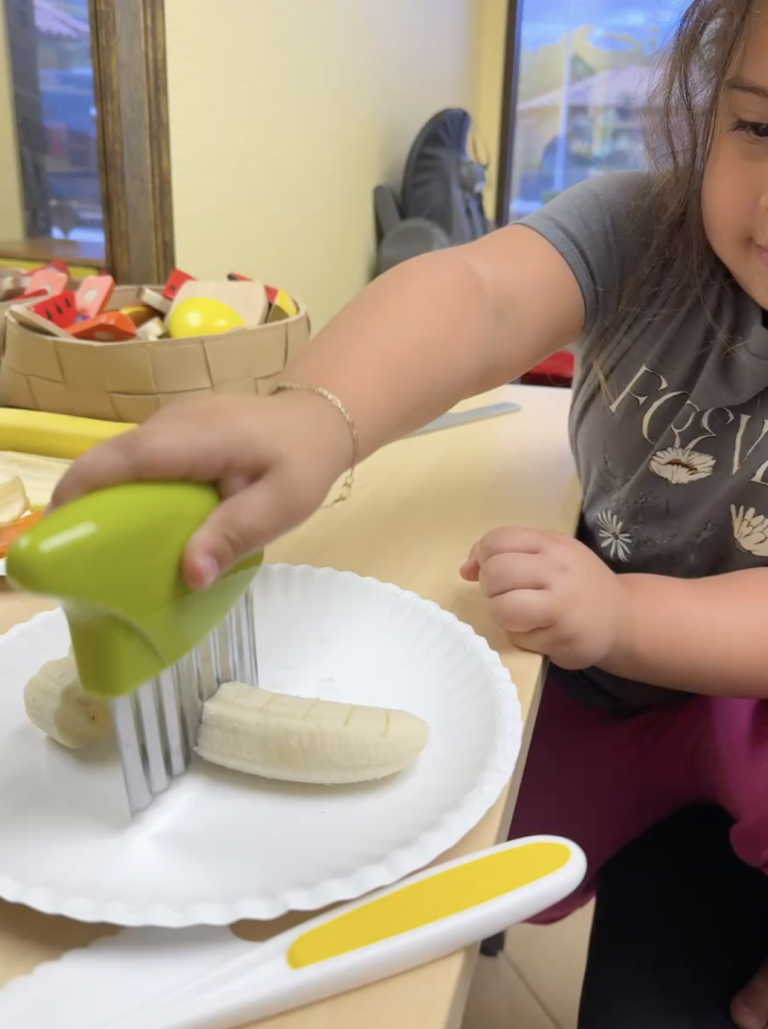
What is the SOS Approach?
SOS stands for Sequential-Oral-Sensory. Developed by Dr. Kay Toomey, the approach considers the whole child: medical factors, movement and oral motor skills, sensory processing, learning, development, nutrition and the mealtime environment.
It uses purposeful play and gradual food exploration to help children learn skills for eating. The focus includes comfort around food and participation in meals, alongside dietary variety.
Read more: SOS: program overview and Steps to Eating
When to ask about feeding support
You may have questions when your child accepts a small range of foods, finds certain textures difficult, avoids exploring unfamiliar foods or has trouble joining family mealtimes. Feeding concerns can occur with or without another developmental diagnosis.
The starting point is an assessment of your child’s eating skills, comfort and medical and nutritional needs. That helps determine whether SOS fits their goals or whether other feeding care or referrals are needed.
Eating involves more than taking a bite
The official SOS overview describes six broad areas in learning to eat: tolerating a food’s presence, interacting with it, smelling it, touching it, tasting it and eating it. Each area contains smaller steps.
A child might first become comfortable with a food nearby, then explore it with a utensil or touch it. These are examples of possible learning opportunities, not a fixed sequence every child must complete at each visit.
- Be near a food
- Interact
- Smell
- Touch
- Taste
- Eat
Read more: SOS: program overview and Steps to Eating
Learning at your child’s pace
SOS emphasizes the child’s strengths, interests and readiness. The therapist invites exploration and responds to the child’s cues, adjusting the challenge when the child needs support.
Children can move between different levels of exploration. The approach does not require a child to eat a particular food or amount on demand. Caregiver involvement helps connect therapy with family routines and priorities.
Read more: SOS: strengths-based, family-centered core principles
How we begin at Sensory Bridge
Bring examples of foods your child accepts, textures they avoid and what mealtimes look like at home. Share questions about chewing, drinking or swallowing, along with relevant medical information.
Your child’s assessment helps guide the goals and recommended care. Our feeding team includes Sooyoun Joung, MA, OTR/L, and Dr. Erin Chung, OTD, OTR/L, whose clinical backgrounds include SOS Feeding. Read their biographies or contact us to discuss scheduling.
Meet our clinical teamCommon questions
Is SOS only for picky eating?
The SOS program addresses feeding difficulties beyond food preferences. A thorough assessment is important because medical, oral motor, sensory, nutritional and environmental factors can overlap.
Will my child be pressured to take a bite?
SOS describes an invitation-based approach that follows the child’s readiness and cues. Exploring a food can be useful practice even before tasting or eating it.
How is this different from swallowing care?
Food exploration is one part of feeding care. Concerns about swallowing safety require an appropriate clinical assessment and may involve coordination with other healthcare professionals. The recommended care depends on the findings.
How quickly will my child accept new foods?
There is no fixed timeline. Goals may include greater comfort, new eating skills and more participation in family meals. The therapist and family review progress together.
What can parents do between visits?
Ask your clinician for individualized ideas that fit your child’s skills and your family’s routines. SOS emphasizes caregiver involvement and respect for the child’s cues.
Explore feeding and dysphagia services · Prepare for a first visit
Sources and resources for families
Explore practical information for families from these organizations. Explore the original organizations’ explanations below.
Start with your family’s questions.
Tell us what your child enjoys, what feels difficult and what you would like to work toward. We can discuss an appropriate starting point together.
Request an evaluationOr call (909) 258-9292.